
The Lasting Legacy of 9/11 on EMS and the Fire Service
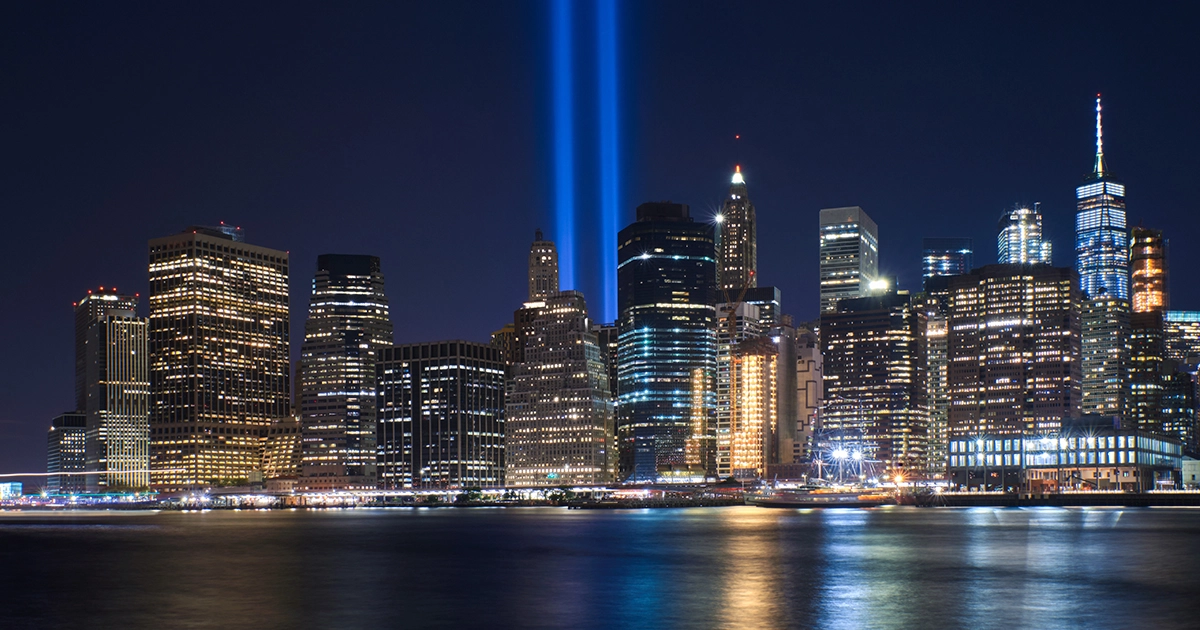
As the United States marks the 25th anniversary of 9/11, the day still feels close for many first responders. September 11th is tied to loss, service, courage, and the difficult lessons that followed. For instructors, this anniversary is also a chance to help the next generation understand how 9/11 changed the way responders train, communicate, lead, and look out for one another.
On September 11, 2001, 2,977 people were killed in the terrorist attacks, including 343 firefighters and paramedics of the New York City Fire Department, 23 New York City police officers, 37 Port Authority police officers, 8 private EMTs and paramedics, and other public safety personnel who responded to the World Trade Center.
For the fire service, 9/11 remains the deadliest day in the country's history. The day also forced emergency response agencies to confront hard questions about what happens when a disaster moves faster than the systems built to manage it.
Remembering the Response
According to the National September 11 Memorial & Museum, the attacks triggered the largest rescue operation in New York City history, with approximately 2,000 police officers, nearly 1,000 firefighters, and more than 100 city and volunteer ambulances dispatched early in the response.
The images of responders moving toward danger are more than an emotional legacy. They also show why today’s students need to be prepared for situations that may exceed anything they have personally experienced.
How 9/11 Changed Emergency Response Training
One of the clearest lessons from 9/11 was that individual skill is not enough during a catastrophe. Responders also need shared systems for making decisions, passing information, and understanding who is responsible for what in dynamic conditions. The 9/11 Commission Report examined those challenges in detail.
For fire and EMS instructors, that lesson creates an important teaching opportunity. When students learn incident command, practice mass-casualty triage, or review communication procedures, they are learning how to function as part of a coordinated response when lives depend on clarity and discipline.
What Changed Across the Fire Service after 9/11
Many of the changes that followed 9/11 were practical. Fire departments looked closely at where information slowed down or failed to reach the people who needed it. That led to stronger communications planning and new investments in tools that could help command staff see more of the incident as it unfolded, a shift discussed by the National Fire Protection Association.
9/11 also influenced building and life safety standards. After its World Trade Center investigation, the National Institute of Standards and Technology made 31 recommendations, and many codes and standards were later updated to address high-rise safety, evacuation, emergency responder communications, and related concerns.
As the health consequences of Ground Zero became clearer, public safety agencies also had to rethink what it means to protect responders. The lesson was not only to wear PPE in the moment, but to take exposures seriously before, during, and after the call. For instructors, this means teaching responder health as a habit, not a reminder tacked on at the end of a lesson.
What Changed Across EMS after 9/11
For EMS instructors, one lasting takeaway is the importance of helping students think beyond routine patient care. In an overwhelmed system, clinicians may have to decide quickly where they can work safely, which patients need the most urgent help, and how to keep information moving to the people making transport and resource decisions. National EMS resources include guidance on mass-casualty triage, including the Model Uniform Core Criteria for MCI triage.
Communications and Interoperability Became a Priority
The need for clear communication was one of the most painful operational lessons of the response to 9/11. The 9/11 Commission Report recommended establishing an interoperable nationwide network dedicated to public safety communications, and public safety leaders spent years advocating for a network built around the realities of emergency response.
That advocacy helped lead to the Middle Class Tax Relief and Job Creation Act of 2012, which allocated $7 billion and 20 megahertz of broadband spectrum to establish a nationwide public safety broadband network and created the First Responder Network Authority to oversee it. Today, FirstNet serves public safety agencies across the country.
Responder Health Became Part of the Legacy
The impact of 9/11 did not end when the fires were extinguished or when the cleanup was complete. The World Trade Center Health Program, established through the James Zadroga 9/11 Health and Compensation Act of 2010 and later reauthorized through 2090, provides medical monitoring and treatment for eligible responders and survivors affected by 9/11-related health conditions.
That ongoing need is significant. Thousands of responders and survivors continued to live with health conditions connected to that day, and hundreds have died as a result of those conditions. The WTC Health Program reports that more than 100,000 members rely on the program for support with certified 9/11-related health conditions, including cancer, airway and aerodigestive disorders, and mental health conditions.
A Legacy Still Felt Across Fire and EMS
Twenty-five years later, 9/11 remains deeply personal for the fire and EMS communities. Its impact is still felt in every name remembered, every department changed by loss, and every conversation about responder health, safety, preparedness, and sacrifice. For instructors, carrying those lessons forward means making them part of how the next generation trains; not just as a story told once a year, but a standard practice every day.