Why Getting a Patient's Perspective Is Essential for EMS Care Today

After over 45 + years as an EMS provider, educator and advocate, I now can say I have a totally new perspective to critical care, that is, from the point of view of a consumer. I have done my best to try to stay out of the hospital, aside from delivering patients and chasing students during their paramedic clinical experience.
As far as relevant past medical history, I am not a smoker, I rarely drink more than one beer, and have tried to stay in “reasonable” shape by running, cycling, and lots of long dog walks. My “log” shows just short of 20,000 miles in the last three decades. My BP slowly crept up over the years, and I try to eat mostly healthy foods. Since I was adopted as an infant, I have no idea what kind of bad genes I may have inherited.
In 2023, I fell while out running, smashing my ribs and shoulder, which required a complete reverse shoulder replacement. No problem…I got through that challenge.
After long walks on hot days, occasionally I noticed some dizziness and rib/chest pain, which I suspected was due to the implant. I decided to get a referral to a cardiologist from my PCP. She ran me through the nuclear stress test, a 12 lead ECG, and a cardiac echo. All the tests seemed just fine to me, but she said the next step was a trip to the coronary catheterization lab.
On the day of the procedure, I asked the doctor to go light on the meds so I could see everything on the screen. They tried the radial approach. After that did not work, they went in through the femoral artery. The doctor showed me I had three significant blocks very close to each other on the Left Anterior Descending (LAD) coronary artery. I immediately realized that I was very lucky, since most patients find out their LAD is that blocked after their sudden cardiac arrest (the LAD is also referred to as the “widowmaker”). The doctor said he was not prepared to put in stents as this was a complicated case.
Rather than being transferred to a local hospital, my wife and I decided to get in the car and drive to Tampa General Hospital (TGA), about 70 minutes from our home. I had already done my research, and I knew they have one of the best cardiothoracic surgery programs in Florida. TGA is a very busy place, and the ED has about 60 beds and 60 more “on the wall.” They were very helpful in treating me like a “direct admit” and we understood it would take some time to get a bed. During our first couple of days, we managed to get all the pre-op testing and interviews with the interventionalist, as well as the surgeon, to make an educated decision on how to proceed. I feel very fortunate that I was able to use the artery under the ribs for the two bypasses instead of needing to use my radial artery and saphenous leg veins. I also liked the fact that my surgeon did the operation “off-pump.” I figured, why take the chance of having to restart the heart, and I thought that doing the operation on a pumping heart was like a paramedic starting an IV in a moving ambulance!
I remember going into the OR and joking with the anesthesiologist, but do not remember coming out some 5-6 hours later. My wife said it did not take too long for them to extubate the ET tube, but with all the anesthesia I was basically cloudy for the rest of that day. I spent the next 3 ½ days in the ICU, part of a day in a step-down unit, and then I was allowed to go home. Six days later, at my follow-up appointment with my surgeon, the team was happy to hear that I was already walking 3-4 miles a day, chose to not take pain meds, lost 20 pounds, was anxious to get back to driving, and was happy to get going on a cardiac rehab program. At this point I feel better every day, I feel very lucky, and I guess I am now qualified to speak as a consumer of critical care.
My Perspective as a Patient
From the emergency department to the hospital floors, through transport for various tests, consultations with the surgical team, the operating room, the ICU, the step-down unit, and finally out the door, I encountered a wide range of healthcare professionals. This included surgeons, nurses, physician assistants, technicians, transport staff, social workers, therapists, clergy, and those who ensured the rooms were spotless and meals were delivered. People of all ages treated my wife and me with respect and kindness. Each person understood their role and executed it flawlessly. They were all vital members of the team, and it's no surprise that TGH consistently receives numerous quality awards for their exceptional care.
The doctors and nurses listened closely to our concerns and questions about medications and the procedure, and they respected our “limited” medical knowledge. At one point one evening I went into AFib, which apparently can happen after cardiac surgery. My nurse was decisive and quickly handled the situation. I’m happy to say I am back to my normal sinus rhythm!
Sleeping in the ICU with all the tubes, IVs, beeping monitors, and a urinary catheter was uncomfortable. By day two, they had me out of bed and in a chair, and I was walking around with a lot of assistance. I managed to sleep in short bursts of about an hour whenever possible. I was committed to my respiratory exercises to avoid complications like pneumonia. It felt like they were constantly taking vitals, administering medication, conducting blood tests, reassessments, chest X-rays, and other tests. Despite the frequent interruptions, everyone who woke me was pleasant and reassuring, always reminding me of their name and role.
The most painful moment was when a surgical team member jokingly told me to take a deep breath and then yanked out two of my four chest tubes. I appreciated the team's attentiveness to modesty during examinations and their efforts to keep me warm. After a day or two, I explored the Epic electronic recordkeeping platform on my laptop, which allowed me to read progress notes and test results. It was clear that key team members had access to all essential information. I also appreciated that nurses gave shift change reports in my room, allowing me to listen in.
Building a team just doesn’t happen. I know it takes a lot of training and excellent communications skills to develop a team so caring and expertly qualified that exceed the patient's expectations. They certainly did for me.
Things I did not see during my stay in the intensive care unit included:
- Providers paralyzed by their “not so smartphones”
- Providers who did not take the time to talk, learn about me and my wife, and answer our questions within the scope of their training
- Providers who made us promises they did not keep
- Providers who asked for a history but did not seem to document it
- Providers who would not shut up and listen to our concerns
- Providers too busy to discuss our concerns
- Providers shouting and arguing amongst themselves in front of the patient
I suppose we have all seen some of these “Don’t Do This” activities in our personal experiences as EMS field providers. Sometimes the reason it is hard to establish a rapport with a patient can be found by simply looking in the mirror!
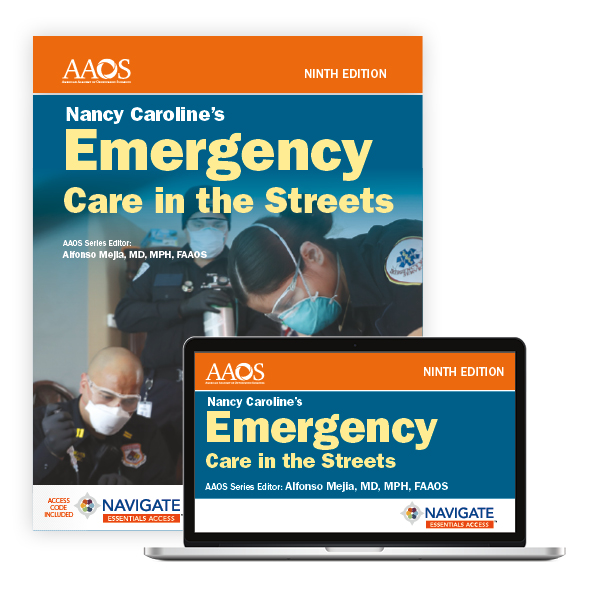
I found these two Street Smarts sections from Nancy Caroline’s Emergency Care in the Streets, Ninth Edition, to be particularly relevant:
- “Patients will notice how you treat or are treated by other EMS personnel at the scene. If you are treated with respect and treat others with respect, then the patient will have more confidence in you.”
“How you approach an interview can make or break a therapeutic relationship. Patients must know you are interested in their well-being as a whole and not simply their condition or injury. Learn to listen carefully to what patients say without interrupting them before initiating a physical exam. More often than not, the cause of the patient’s symptoms can be determined from the patient’s own words, with the physical exam and diagnostic tests simply confirming the suspected cause or differential diagnosis. It has often been said, patients don’t care how much you know until they know how much you care.”
How to Work with Today’s EMS Students
In a recent conversation I had with an EMS educator, she observed that younger generations often prefer texting and observing over direct conversations and physical interactions. They simply have a different communication style, likely influenced by technology, COVID isolation, and evolving social norms. These differences may exist, but the essential traits for healthcare providers, such as kindness, empathy, compassion, observation, decisiveness, critical thinking, and excellent communication, are still vital. Educators, skills instructors, clinical preceptors, HR teams, orientation coordinators, mentors, medical directors, and field supervisors may need to adapt their approaches to nurture these traits. It's important to recognize that every generation brings unique communication styles, and we have always adapted to help them succeed in their roles.
For EMS professionals, a reluctance to engage deeply with patients can result in poor or even devastating outcomes. It’s easy for someone in an older generation who’s been socialized differently to tell them, “be brave! Get over it!” but that doesn’t drive improvement.
It is definitely worth the time for EMS instructors to help students ease their way into uncomfortable territory to be the best EMS professionals they can be. Think about this when planning your classes, labs, skill sessions, clinical rotations, and evaluations. We all can come up with examples where being better at establishing a rapport with the patient and improved communications could have prevented unnecessary or inappropriate care. Perhaps it was that drug allergy that was missed or the rush to decompress the lung of an elderly man in a collision with no lung sounds on the right side from that lung removal he had a few years ago. Perhaps it was that woman on the floor in the nursing home with an obviously fractured hip which the provider treated but missed asking how it happened (was it a snap, then a fall or feeling dizzy and waking up on the floor?)—missing entirely the need for a cardio workup.
In Summary
This recent Thanksgiving was quiet at our house; we did the Turkey Trot (walk) in the neighborhood with our dogs but we did not travel. We realized that we have a lot to be thankful for. I feel especially lucky to have identified the blocks in my coronary arteries and privileged to have had an excellent team of healthcare providers from Tampa General Hospital fix the problem for me. Now my job is to follow the lessons in the cardio rehab program and carry on! Some key pointers to share:
- Respectful, active listening goes a long way in establishing patient/provider rapport.
- Listen to your body and the signals it provides to you!
- Everyone in your organization serves an essential role in the services you provide when the call comes in.
- Remember to check your attitudes and bias at the door before you enter!
- Go the extra mile in your training to help today’s students communicate and meet the challenges of the field.
- Thanks for working the upcoming holidays!
- Thanks for doing your part to save lives and help the ill or injured, in the worst moments of their life, get through the moments with your kindness and professionalism.
- And as always, be careful out there!
About the Author
Bob Elling, MPA, Paramedic (retired) – has been a career paramedic, educator, author, and EMS advocate for 5 decades. He was a paramedic with the Town of Colonie EMS Department, Albany Times Union Center, and Whiteface Mountain Medical Services. He was also an Albany Medical Center Clinical Instructor at the HVCC Paramedic Program. Bob served as AHA National/Regional Faculty and participated in many successful life-saving legislative campaigns with the You’re the Cure Network®. Bob served as paramedic and lieutenant for New York City EMS, a paramedic program director, and associate director of New York State EMS Bureau. He has authored hundreds of articles, videos, Blogs, and textbooks to prepare EMS providers for their career. Bob is the ECSI Series Editor for the CPR and First Aid books, Co-Author of EVOS-2, and Co-Lead Editor of Nancy Caroline’s Emergency Care in the Streets.
Nancy Caroline's Emergency Care in the Streets
Thoroughly reviewed by medical doctors and subject-matter experts, Nancy Caroline's Emergency Care in the Streets teaches students the technical skills required of today's paramedic while emphasizing other important professional attributes, including critical thinking, empathy, teamwork, communication, problem solving, and personal well-being.
Request More Information