
Speaker Lineup at FDIC 2026
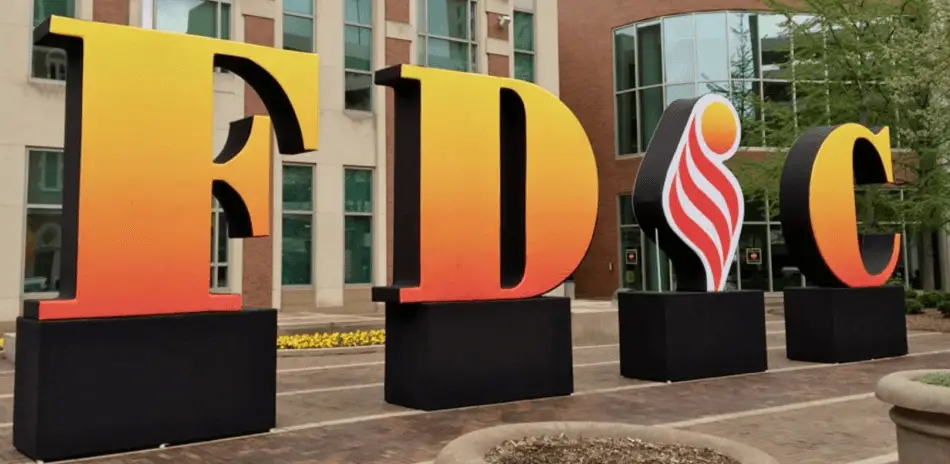
The FDIC International 2026 is right around the corner. This conference, which takes place from April 20-25, 2026, in Indianapolis, provides fire leaders, instructors, and other professionals with a venue to collaborate and learn.
With a diverse range of speakers covering various critical topics, this conference is designed to enhance your teaching skills and expand your knowledge.
Public Safety Group is proud to have several affiliated speakers at this year’s event, covering topics such as building construction, mental health, professional development, volunteer service, vehicle extrication, improving instruction, and improving decision making.
Monday, April 20
Speaker: Becki Rowan-White
Becki Rowan-White has served 20 years in the fire service in every level from firefighter to chief officer, including time as a statewide Fire and Life Safety Educator. She also serves as an advisory board member for the Minnesota Board of Firefighter Training and Education and a K-12 Education Program Manager with Underwriters Laboratories Research Institutes (ULRI).
Battalion Chief Rowan-White contributed to Fundamentals of Firefighter Skills and Hazardous Materials Response, Fifth Edition.
Session info from FDIC: This interactive workshop is built for experienced fire service instructors who are comfortable presenting and want to strengthen how they engage learners to improve outcomes. Participants are asked to bring at least one current or upcoming presentation, which they’ll revise during the session using practical strategies introduced throughout the workshop. Topics include presentation fundamentals, audience connection, and dynamic delivery techniques. By the end, participants will leave with a refined presentation, a stronger understanding of their instructional impact, and greater confidence in delivering content that connects.
Monday, April 20
Speaker: Forest Reeder, Chief (ret.)
Forest Reeder began his fire service career in 1978 and retired in 2021 as Fire Chief of Tinley Park, Illinois. Throughout his career, he has been deeply involved in training and instruction, leadership development, and incident safety. In 2008, he received the ISFSI/FDIC George D. Post Instructor of the Year Award, widely regarded as the highest national honor for fire service instructors.
Reeder has authored Fire Department Incident Safety Officer, Fourth Edition and Fire and Emergency Services Instructor, Fourth Edition.
Session info from FDIC: This immersive program is designed for fire service instructors, company trainers, and training officers focused on improving the quality, safety, and efficiency of their training programs. Drawing on adult learning principles, updated NFPA standards, and decades of instructional experience, the session helps training leaders strengthen fireground readiness, retention-focused teaching, and performance-driven outcomes. Participants engage in group discussions, hands-on activities, case studies, and peer collaboration to sharpen their instructional approach. Attendees will leave with practical tools, actionable takeaways, and renewed motivation to elevate how training is designed and delivered.
Monday, April 20
Speakers: Glenn Corbett, Asst. Chief (Ret.) — Waldwick (NJ) Fire Department and Paul Dansbach, Fire Marshal - Rutherford Bureau of Fire Safety
Glenn P. Corbett is an associate professor at John Jay College in New York City and assistant chief (ret.) with the Waldwick (NJ) Fire Department with 43 years of service. A recipient of the Tom Brennan Lifetime Achievement award, he is the author of Brannigan's Building Construction for the Fire Service with Navigate Advantage Access, Seventh Edition.
Session info from FDIC: This session continues the building construction walk with a focused approach, examining two structures in depth—one older and one modern. The indoor tour explores key elements such as structural design, construction materials, fire resistance, fire protection systems, occupancy considerations, and egress features. Attendees will gain practical insights relevant to both firefighting operations and code enforcement.
Tuesday, April 21
Speaker: Dena Ali
Dena Ali is a battalion chief with the Raleigh (N.C.) Fire Department and the program manager for behavioral health with the First Responder Center for Excellence. She has a master’s degree from the University of North Carolina Pembroke, where her research focused on firefighter suicide. Ali is an adjunct instructor with the National Fire Academy and the founder and director of North Carolina Peer Support.
Battalion Chief Ali spoke to Public Safety Group on the topic of mental health in the fire service.
Session info from FDIC: This lecture explores the critical link between leadership and the mental health of first responders. Rather than focusing solely on exposure to traumatic events, it emphasizes how strong leadership, open communication, trust, training, and proactive support shape a culture of psychological well-being. Participants will examine how leaders can model the behaviors that support both performance and resilience. Through evidence-based research and case studies from high-performing organizations, the session addresses the realities of PTSD—its origins, diagnosis, and treatment—while highlighting practical pathways toward resilience and growth.
This lecture is approved for 4 EMS Credit Hours.
Tuesday, April 21
Speaker: Glenn Corbett
Session Info from FDIC: This tactical-focused session brings together leading voices in fire protection, engineering, and command to examine the evolving challenges of mid- and high-rise incidents. Topics include the World Trade Center’s legacy codes and the ongoing struggle for change, the critical role of the Fire and Life Safety Director, standpipe design challenges, and proven strategies for mastering high-rise firefighting operations.
Featuring presentations by Charles Jennings, Glenn Corbett, Tom Burke, Terin Hopkins, and Brent Brooks, the session concludes with a panel discussion that draws on real-world experience, research, and command-level insight to address today’s most pressing high-rise fireground concerns.
Wednesday, April 22
Speakers: Charles Jennings, Associate Professor - John Jay College of Criminal Justice, Glenn Corbett, Assistant Chief (ret) - Waldwick NJ FD
Session Info from FDIC: The 9/11 attack on the World Trade Center followed decades of concern from fire officials and safety advocates, with improvements made after the 1993 terrorist attack helping save lives on September 11. After the unprecedented collapse of the Twin Towers—the largest engineering failure in history—there was initially little effort to fully investigate the event. This class explores the behind‑the‑scenes advocacy led by firefighters and victims’ families, despite early resistance from national organizations and parts of the emergency services community. Their efforts ultimately secured congressional support for federal investigations and the NIST reports, which clarified key issues related to collapse and evacuation and led to significant code changes in New York City, updates to national codes, and improvements to NFPA standards through the High‑Rise Building Safety Advisory Committee.
Wednesday, April 22
Speaker: Joe Nedder, Deputy Chief of Training (Retired), Mendon (Mass.) Fire Department
Named the George D. Post Instructor of the Year award from the International Society of Fire Service Instructors, Deputy Chief Joe Nedder joined the fire service in 1977 and later became an instructor for the Massachusetts Fire Academy, where he developed and implemented a Firefighter I/II program for volunteers and on-call firefighters. In 2008, he formed his training organization Cross St Associates, focusing on training for volunteer and small organizations to meet required standards.
Deputy Chief Nedder is the author of Fire Service Rapid Intervention Crews.
Session Info from FDIC: Officer training is consistently in demand, yet the fire service often overlooks the significant differences between career and volunteer departments. Too often, training is built around a “one size fits all” approach that fails to reflect the realities of volunteer and on‑call agencies, many of which serve small communities with limited call volume. This class is designed specifically to address those differences by recognizing the unique needs of the volunteer service and establishing a practical foundation for the skills volunteer fire officers need to operate safely and effectively on the fireground.
Friday, April 24
Speaker: Dave Casey, Superintendent (Ret.) — Florida State Fire College
Dave Casey has served as Florida's State Fire Training Director and the Chief of Clay County (FL) Fire Rescue. He rose through the ranks in the career Sunrise Fire Rescue Department and the volunteer Plantation Fire Department.
Superintendent Casey co-authored Live Fire Training: Principles and Practice, Second Edition.
Session Info from FDIC: This class examines common instructional pitfalls that can undermine the effectiveness and clarity of an instructor’s message. It addresses classroom challenges such as improper use of media, distractions, and preventable instructional missteps, while emphasizing strategies to improve content delivery and participant retention. Central to the session is the “Instructional Law of Unintended Consequences,” which explores the unspoken messages instructors may convey without realizing it. These unintended signals can conflict with course objectives and unintentionally diminish the importance of critical areas such as EMS, fire prevention, public education, drill ground safety, and especially high‑risk training like live fire operations.
Friday, April 24
Speaker: Rommie Duckworth, Captain, Ridgefield (CT) Fire Department
Rom Duckworth is a dedicated emergency responder, author, and educator with more than thirty years of experience working in career and volunteer fire departments, hospital healthcare systems, and private emergency medical services.
Captain Duckworth has authored or contributed to several instructional materials, including:
Session Info from FDIC: As alternative fuel vehicles (AFVs) become more common, emergency responders face increased risk and complexity at roadway incidents. From CNG and hydrogen to high‑alcohol fuels and electric drivetrains, each presents unique hazards that may be hidden, delayed, or easily misidentified. This class introduces a universal five‑step approach applicable to any motor vehicle incident, regardless of fuel type. Using real‑world case studies, including the 2024 CNG explosion that critically injured nine LAFD firefighters, the session highlights the dangers of unseen threats such as odorless gas leaks, clear‑burning fires, cryogenic venting, and lithium‑ion battery thermal runaway.